Going off grid means your property runs entirely on its own solar panels, battery storage and backup generator, with no connection to the SA Power Networks grid. Off grid solar installation in SA suits remote blocks where a grid connection is expensive or unavailable, and it can work for established homes too, provided the system is designed for the worst week of winter rather than an average day in January.
This guide covers what an off-grid system includes, how we size one for SA conditions, what drives the cost, and the shortcuts that cause cheap systems to fail. It draws on the off-grid systems we design and install across Adelaide, the Adelaide Hills, the Fleurieu and regional South Australia.
What Does an Off-Grid Solar System Include?
A complete off-grid system has five parts that must work as one. Undersize any of them and the whole system suffers.
- Solar array: generates the energy. Off-grid arrays are usually much larger than a typical suburban rooftop system, because they have to refill the battery during short winter days.
- Battery storage: carries the property through the night and through runs of cloudy weather. Lithium batteries from brands such as BYD, Sungrow and Sigenergy are now the standard choice — our battery brand comparison explains the differences.
- Off-grid inverter: converts stored DC power into 230V AC, manages charging and decides when to call on the generator.
- Backup generator: covers extended cloudy periods and unusually heavy loads.
- Switchboard, cabling and protection: isolation, earthing and protection designed for a stand alone power system.
Two Australian Standards govern this work: AS/NZS 4509 covers stand-alone power systems, and AS/NZS 5139 covers the safe installation of battery systems. Load management tools such as Catch Power can also send surplus solar to hot water or pool pumps once the batteries are full, so you use that free energy rather than lose it.
How Do You Size Off Grid Solar for South Australian Winters?
When planning your off grid solar system installation in SA, size the system for June and July, not summer. Winter days are shorter, and areas like the Hills, the south-east and Kangaroo Island can experience a week of heavy cloud cover.
Start With Real Load Data
Every design starts with a load assessment: each appliance, how long it runs and when. Twelve months of power bills help for an existing home. For a new build, we work from the planned appliance list. Ducted air conditioning, electric cooking, bore and pool pumps, and workshop equipment shape the design more than anything else.
Plan for Days of Autonomy
Days of autonomy means how many days the battery can carry the property with little or no solar input. Industry off-grid design guidelines commonly work on two to five days, depending on how critical the loads are. A weekender shed can accept less. A family home with a home office or medical equipment needs more, or a generator that starts automatically.
Oversize the Array, Not Just the Battery
A big battery is useless if the panels can’t refill it on a grey winter’s day. We size the array so it recovers the battery quickly once the cloud clears, which usually means more panels than summer demand alone would suggest. Panel tilt matters too: steeper angles favour winter production, as our guide to the best angle for PV panels explains.
Leave Room to Grow
Plans change once people live off grid. Our off-grid installation on Kangaroo Island started with a new shed and a home still on the drawing board, so we sized the system for the property’s future load from day one instead of installing something that would need replacing.
Do You Still Need a Generator When You Go Off Grid?
For almost every full-time off-grid property in South Australia, yes. A correctly sized off grid generator costs far less than the extra panels and batteries needed to ride out the rare worst-case week on solar alone.
The best set-up uses an automatic-start generator wired into the inverter. It starts when battery charge drops to a set point, recharges the batteries efficiently, then shuts itself down. Nobody has to walk out to the shed in the rain at 10pm.
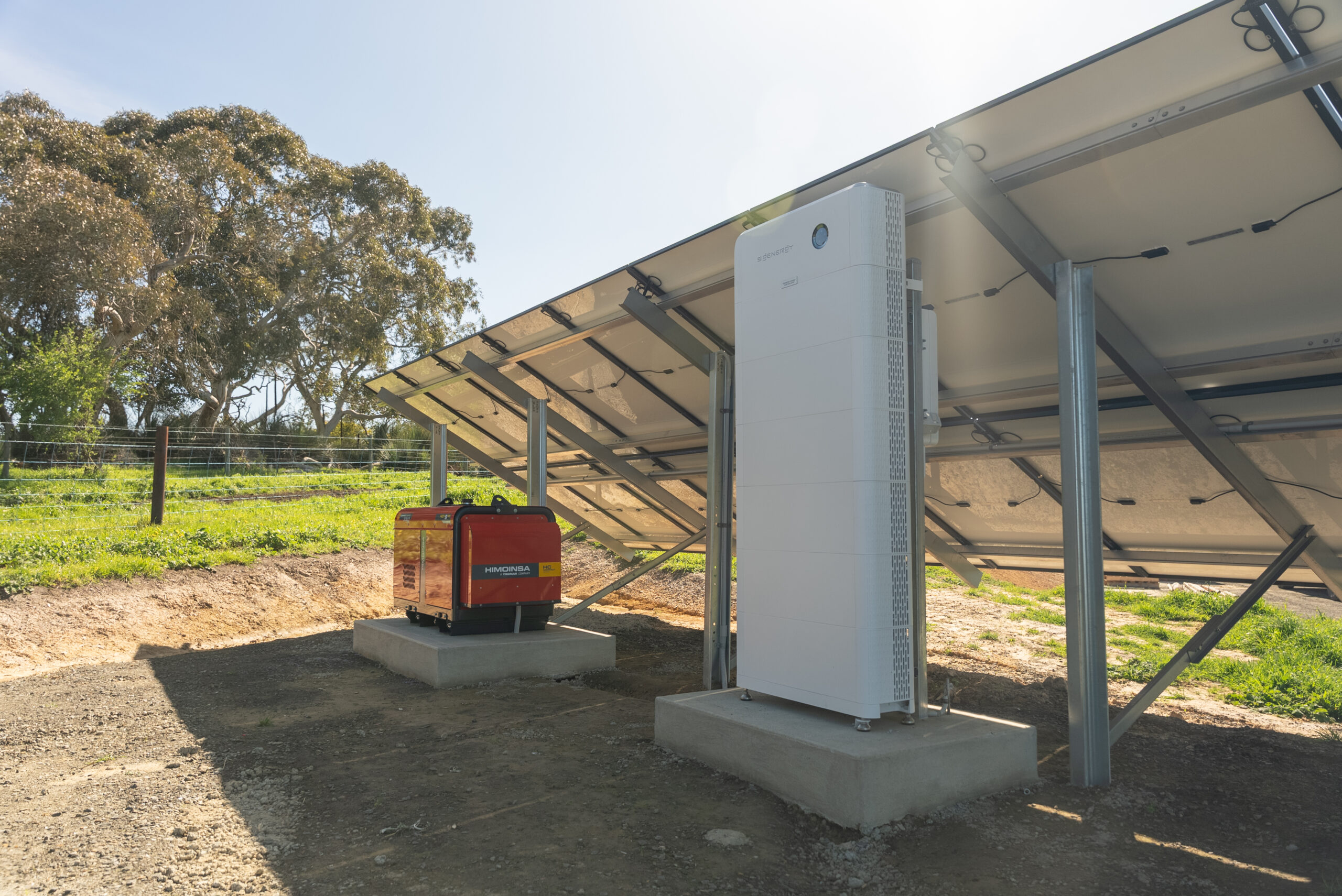
Our off-grid project at Mount Jagged shows how this works in practice. Two Airbnb properties with no grid supply now run on 48 × 475W Jinko panels (22.8kW), 52kWh of battery storage and an 8kVA automatic-start generator, tied together through a Sigenergy gateway. We also added a generator bypass, so both properties can run directly from the generator if the battery system ever shuts down.
What Does It Cost to Go Off Grid in South Australia?
The cost of off grid solar installation in SA depends mainly on your daily energy use, how many days of backup you need, and the site itself. Published 2026 industry guides estimate that a complete off-grid system for an average three-to-four-bedroom home costs around $40,000 to $70,000, while smaller cabin systems can start at $15,000 to $30,000 (Energy Matters, 2026). These figures are indicative only. Every property is different, so a site assessment is needed to provide an accurate quote.
The main factors that move the price:
- Daily energy use and the size of your biggest loads
- How many days of autonomy you need
- Battery capacity and brand
- Roof-mounted or ground-mounted array (ground mounts need piles or footings, plus trenching)
- Distance between the array, battery and house, since long runs need heavier cable
- Generator size, and whether it starts automatically
- Site access, especially for island, hills or remote work
For a remote block, get a grid connection quote alongside an off-grid quote. Extending poles and wires to a distant site can cost as much as, or more than, a stand-alone system. Federal small-scale incentives administered by the Clean Energy Regulator can also reduce the upfront cost of eligible equipment. Eligibility and amounts change, so we confirm what applies when we quote.
What Fails on Cheap Off-Grid Systems?
Most off-grid failures trace back to a design shortcut, not a faulty panel. These are the problems we see most often on systems installed by others:
- Battery sized for an average day: fine in summer, flat by the third cloudy day in winter.
- Undersized inverter: can’t handle the start-up surge of a bore pump or air conditioner, so it trips under load.
- Manual-start generator, or none at all: someone has to notice the battery is low before the power cuts out.
- Mismatched components: panels, inverter and battery that don’t communicate properly, leading to inefficient charging and messy warranty claims.
- Poor equipment placement: batteries and inverters baking in a tin shed in 40°C heat lose capacity and lifespan.
- Kits with no load assessment: a box of parts isn’t a design.
- No monitoring: problems go unnoticed until the lights go out.
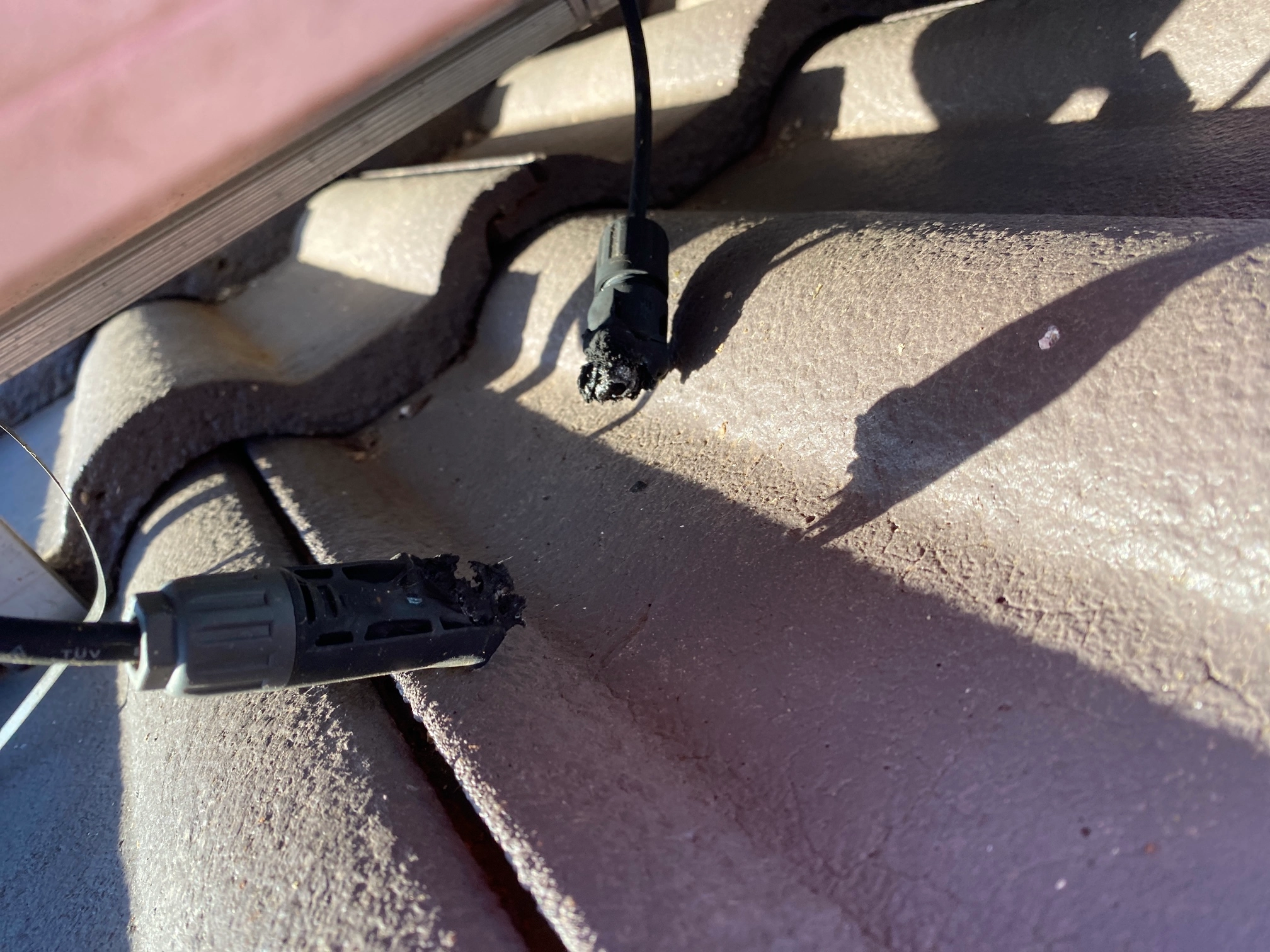
Equipment placement is one of the simplest things to get right. On the Mount Jagged job, we positioned the battery and electrical gear beneath the ground-mounted array to shelter it from direct sun and weather. If an existing system is already struggling, our solar repair and maintenance team can diagnose it, including systems we didn’t install.
Can You Disconnect From the Grid If You’re Already Connected?
You can, though it’s rarely the first step we’d recommend for a suburban Adelaide home. Permanent disconnection is arranged through your electricity retailer and SA Power Networks, and reconnecting later can be expensive.
For most grid-connected homes, a well-sized solar battery system delivers most of the independence while keeping the grid as a safety net. Our guide on what size solar battery you need walks through that decision. Full off-grid makes most sense when a property has no connection, when a new connection would be costly, or when you’re building on a rural block from scratch.
What You Need Before Going Off Grid
Good preparation shortens the design stage and avoids expensive changes later. Have these ready before you talk to an installer:
- Twelve months of power bills, or a list of planned appliances for a new build
- A site plan showing where the array, battery and generator could go
- A check with your council on approvals for ground-mounted arrays or new structures, as rural zones vary
- A clear decision on full-time living versus weekend or seasonal use
- An installer with Solar Accreditation Australia accreditation who designs the whole system, not just sells parts
- A maintenance plan covering battery firmware, generator servicing and panel cleaning
Off grid solar SA projects reward this groundwork. The more accurately your loads and site are known, the closer the design matches how you actually live.
Planning to Go Off Grid?
Off-grid power rewards careful design and punishes shortcuts. NG Elec’s certified solar electricians and energy specialists handle your off grid solar system installation in SA, from load assessment and system design through to installation, generator integration and ongoing support, all backed by a lifetime warranty on workmanship.
Frequently Asked Questions
Is off grid solar worth it in South Australia?
For properties without a grid connection, or where connecting would be expensive, off grid solar in South Australia is often the most practical long-term option. For homes already on the grid, a battery with grid backup usually makes more financial sense. We give you an honest view after a site assessment.
How big a battery do I need to go off grid?
It depends on your overnight usage and how many days of autonomy you want. Full-time off-grid homes need far more storage than a typical grid-connected battery. Our Mount Jagged project, which powers two accommodation properties, uses 52kWh of storage alongside an automatic-start generator.
Can I run air conditioning on an off-grid system?
Yes, if the system is sized for it. Air conditioning is one of the largest loads in most homes, so the array, battery and inverter all need to account for it, particularly the inverter’s ability to handle start-up surges. We factor in heating and cooling during the load assessment.
How long does an off grid solar installation take?
Most installations take between one day and a week once the design is approved and equipment is on site. Our Kangaroo Island system took one day, while the larger ground-mounted Mount Jagged system took five days. Trenching, ground mounts and site access are the biggest variables.
How much does an off-grid system cost to install?
Cost depends on your energy use, battery size, generator, mounting and site access, so every system is priced to the property. Contact NG Elec directly for an accurate quote — all pricing is confirmed before any work begins, with no obligation to proceed.
Do off-grid solar systems need maintenance?
Yes. Generators need regular servicing, batteries and inverters benefit from firmware updates and health checks, and panels perform better when kept clean. A scheduled maintenance plan catches small issues before they become outages, and we offer discounts on scheduled maintenance.