The honest answer to “what size solar battery do I need” is the one that covers your evening and overnight usage without sitting half-empty most of the year. For a lot of Adelaide households that lands somewhere between 10 kWh and 20 kWh of usable capacity — but the number that matters is yours, not the average, and it comes from two figures: how much power you use after the sun goes down, and how much surplus solar you currently export for very little in return. Sizing also drives the economics — see solar battery payback in Adelaide.
Sizing a battery well is a usage question before it is a product question. Get those two numbers right and the shortlist of batteries almost picks itself.
Start with Your Overnight Usage, Not the Battery Brochure
A battery only ever earns its keep on the energy it discharges. That means the first figure to find is what your home draws between roughly 4pm and 9am — the window when your panels are producing little or nothing.
Your electricity bill or retailer app gives you daily consumption in kilowatt-hours. Australian households can compare their own usage against published regional benchmarks through the Australian Energy Regulator’s Energy Made Easy benchmark tool, which is a more reliable starting point than a rule of thumb.
From your daily total, work out the evening share. In most homes with solar already installed, roughly half to two-thirds of consumption happens outside daylight hours, because the daytime load is being quietly covered by the panels.
A Simple Way to Estimate It
- Take your average daily usage in kWh from your bill
- Subtract what runs during daylight — pool pump, dishwasher, laundry, hot water on a timer
- What is left is your overnight load, and that is the capacity a battery actually needs to cover
- Add headroom for the loads you plan to add: an EV, ducted air conditioning, a heat pump, a granny flat
Any online solar battery size calculator will run a version of this same sum. The gap between a calculator and a proper assessment is that a calculator cannot see your switchboard, your inverter, or the fact that your reverse-cycle system carries the house through a run of 40-degree evenings.
How Much Battery Storage Do I Need if My Solar Already Exports?
Look at your export figure before you look at capacity. A battery cannot store solar you never generate, so your surplus sets the ceiling on how much storage you can realistically fill each day.
South Australia has the highest rooftop solar penetration in the country, and the value of exporting has been falling steadily as a result — the middle of the day is exactly when the grid is most saturated. Feed-in rates are set by retailers and change regularly, so check your current rate on your latest bill rather than the number you were quoted when the system went in.
The practical consequence is straightforward. Energy you self-consume is worth what you would otherwise pay to buy it back at night, which is materially more than what a retailer credits you for exporting it. That difference is the whole economic case for storage.
Matching the Battery to Your Surplus
- Export more than you could ever store overnight: size on overnight usage, and consider whether a larger battery lets you shift more load
- Export very little: a bigger battery will not fill, and the better first move may be more panels — see our guide on how many solar panels you need in Adelaide
- No solar yet: design the panels and the battery together rather than retrofitting a compromise later
If you already have an array and are adding storage to it, the retrofit question is worth reading on its own — we cover it in can you add a battery to existing solar.
Usable Capacity, Power Output and Depth of Discharge
Two batteries advertised at the same kilowatt-hour figure can behave very differently in a real home. Three specifications decide that, and only one of them is the headline number.
Usable vs Nominal Capacity
Nominal capacity is what the cells hold. Usable capacity is what the battery management system will actually let you draw. Compare batteries on usable kWh, or you are comparing two different things.
Continuous Power Output in Kilowatts
Capacity is the size of the tank; power output is the size of the tap. A battery with plenty of stored energy but modest continuous output will still pull from the grid the moment the oven, the kettle and a ducted system run together. Households with high simultaneous loads should weigh output as carefully as capacity.
Backup During an Outage
Not every battery keeps the house running when the grid drops, and those that do usually back a selected circuit rather than the whole switchboard. If riding out a storm outage matters to you, say so early — it changes both the product shortlist and the wiring.
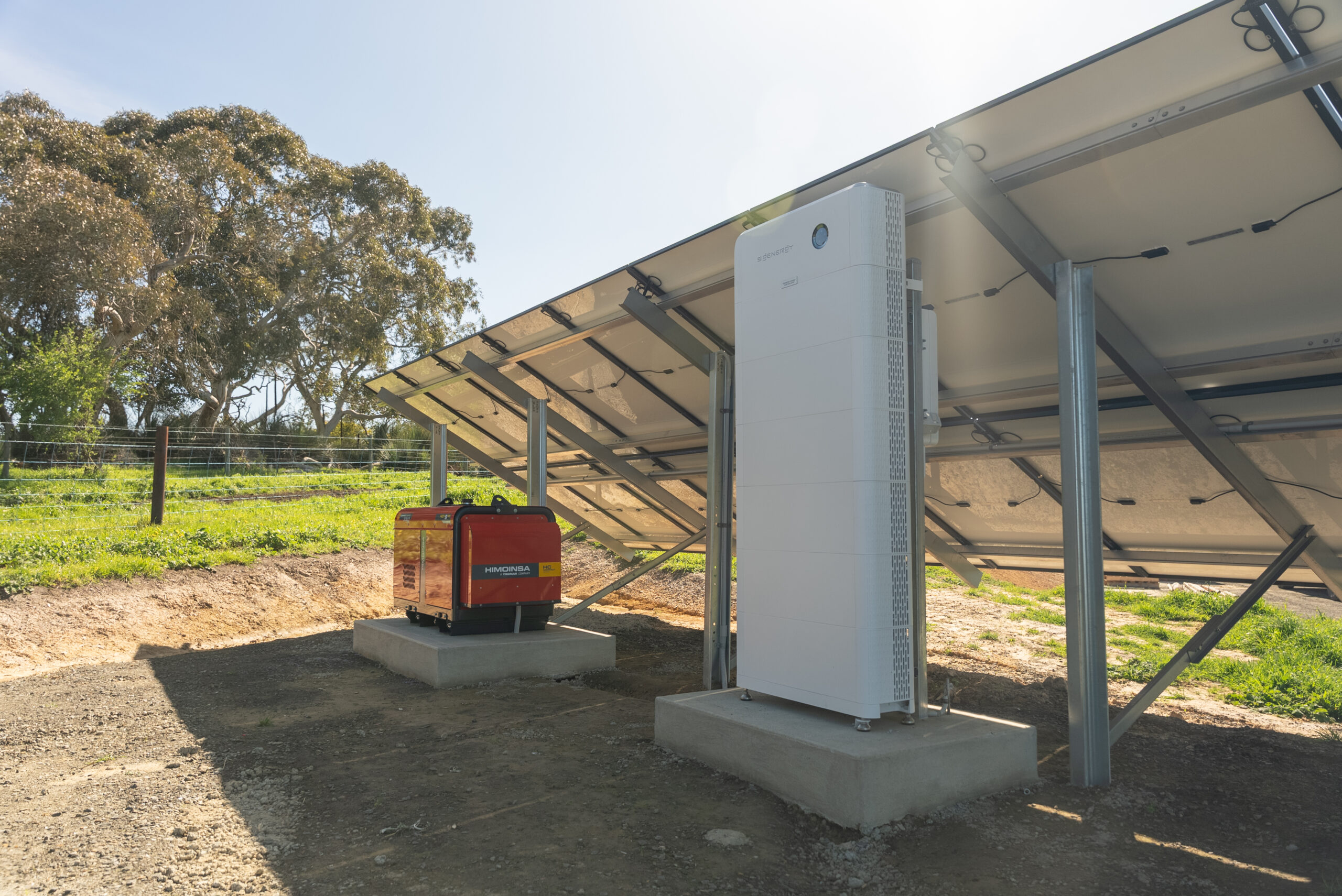
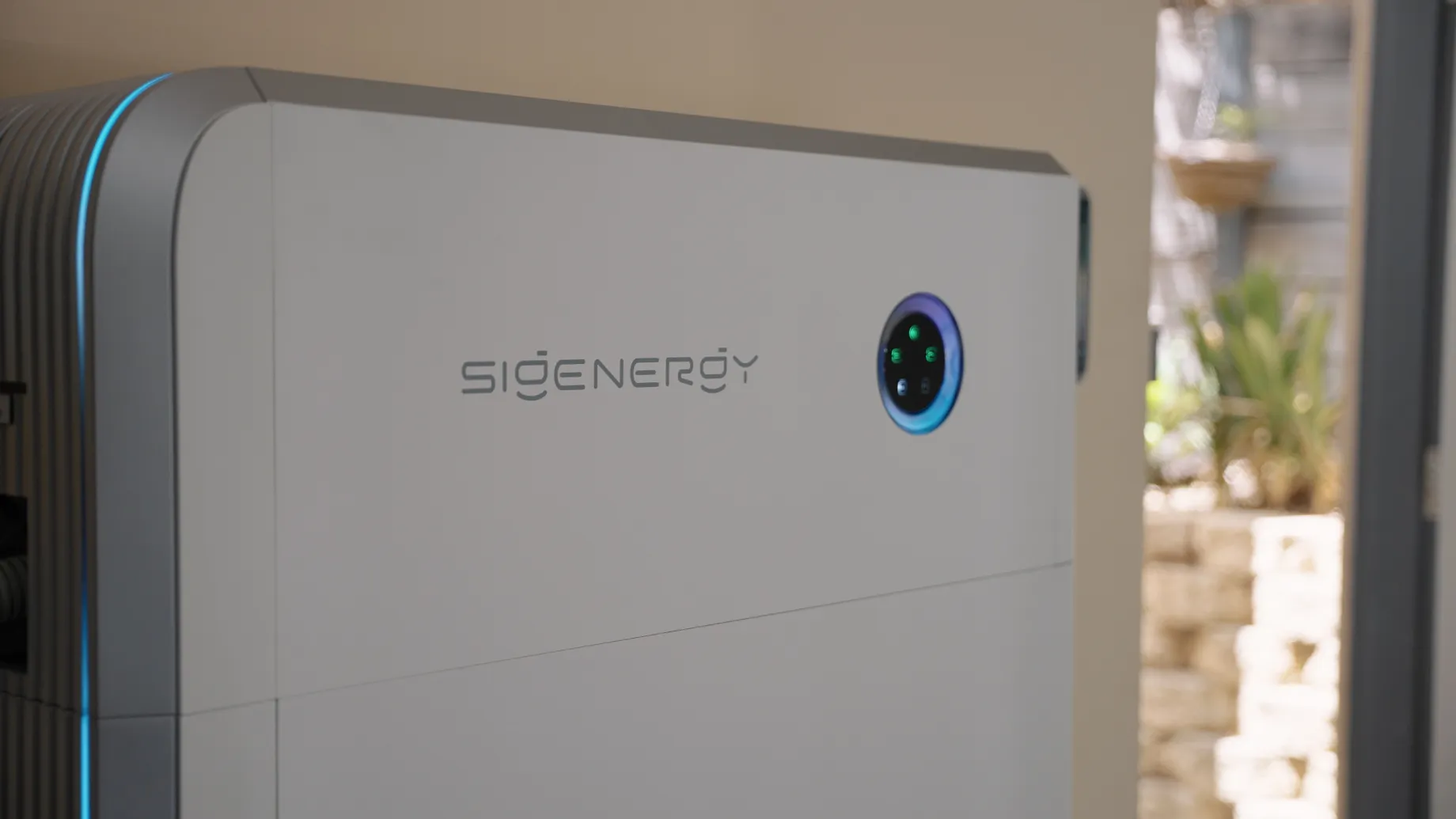
We work with Sigenergy, Sungrow, Tesla Energy and BYD battery systems, among others, and the specifications above are where they genuinely differ. Our comparison of the best solar battery options for Adelaide homes runs through how they stack up.
What Adelaide Conditions Do to Battery Sizing
Adelaide’s climate pushes household demand into two sharp peaks, and both of them land outside peak solar production.
- Summer: consecutive days above 35 degrees keep air conditioning running well into the evening, long after production has dropped off — the single biggest driver of an undersized battery
- Winter: shorter days and lower sun angles cut generation, so a battery that fills easily in January may only partly charge in June
- Older eastern-suburbs homes around Unley, Burnside and Mitcham often have limited insulation and heavier heating and cooling loads than their floor area suggests
Sizing for a mild spring week is the most common mistake. Size for the fortnight that hurts — a summer heatwave and a cold, overcast winter run — and the rest of the year takes care of itself. If a battery is part of a wider plan to run more of the house on your own power, an EV charger changes the maths again, and properties chasing full independence should look at off-grid solar systems instead.
Is a Bigger Battery Always Better?
No. A battery that routinely finishes the night with half its capacity untouched has cost more than it will return, and oversizing is as common a mistake as undersizing.
Cost scales with usable capacity, so every extra kilowatt-hour needs a job. What drives the final figure is capacity, inverter compatibility, whether backup circuits are wired in, switchboard condition and the complexity of the install itself. Those are the levers worth discussing before any number is put on paper.
Two cases genuinely justify sizing up. The first is a known load arriving soon — an EV, a pool, a heat pump, a home office. The second is a modular battery you can add capacity to later, which lets you start close to today’s usage and expand as the household changes.
One more thing worth checking before you commit: your existing system’s health. A battery paired with an underperforming array will never charge to its potential, which is why we usually recommend a solar service and inspection on older systems first.
Ready to Size It Properly?
Working out what size solar battery you need takes twelve months of your real usage data, a look at your switchboard and inverter, and an honest conversation about what you want the battery to do — cut bills, keep the lights on in an outage, or both. That is exactly what a site assessment is for.
NG Elec designs, installs and services solar battery systems and residential solar across Adelaide and the surrounding council areas, with a lifetime warranty on workmanship and free quotes. Our team will size the system on your numbers, not an average, and explain every recommendation in plain terms before anything is ordered.
Get your free quote today — call NG Elec on 0425 322 552
Frequently Asked Questions
What size solar battery do I need for a family of four?
Most four-person households in Adelaide use enough power after dark to justify somewhere in the 10 kWh to 20 kWh usable range, but the right figure comes from your own overnight consumption rather than household size. A family that runs ducted air conditioning through summer evenings needs meaningfully more storage than one on a single split system.
Can I add a battery to my existing solar system?
In most cases, yes. Whether it is a straightforward addition depends on your existing inverter — some systems accept a battery directly, while others need an additional battery inverter or a hybrid replacement, and the switchboard may need attention as part of the work.
How many kWh do I need to get through the night?
Take your average daily usage from your bill and subtract the loads that run in daylight; what remains is your overnight requirement. Adding a modest buffer on top of that covers cloudy days when the battery does not reach a full charge.
Will a solar battery keep my power on during a blackout?
Only if the battery is backup-capable and has been wired for it, and even then most setups back a selected group of circuits rather than the entire home. Tell your installer at the design stage if outage backup matters, because it affects both the product choice and the installation.
How much does a solar battery cost in Adelaide?
Cost depends on usable capacity, inverter compatibility, backup wiring and the condition of your switchboard, so there is no single figure. Contact NG Elec directly for an accurate quote — all pricing is confirmed before any work begins, with no obligation to proceed.
Is it better to buy more panels or a battery first?
If you are exporting very little surplus, more panels usually deliver more value first, because a battery can only store energy you actually generate. If your system already exports a healthy surplus most days, storage is the better next step.