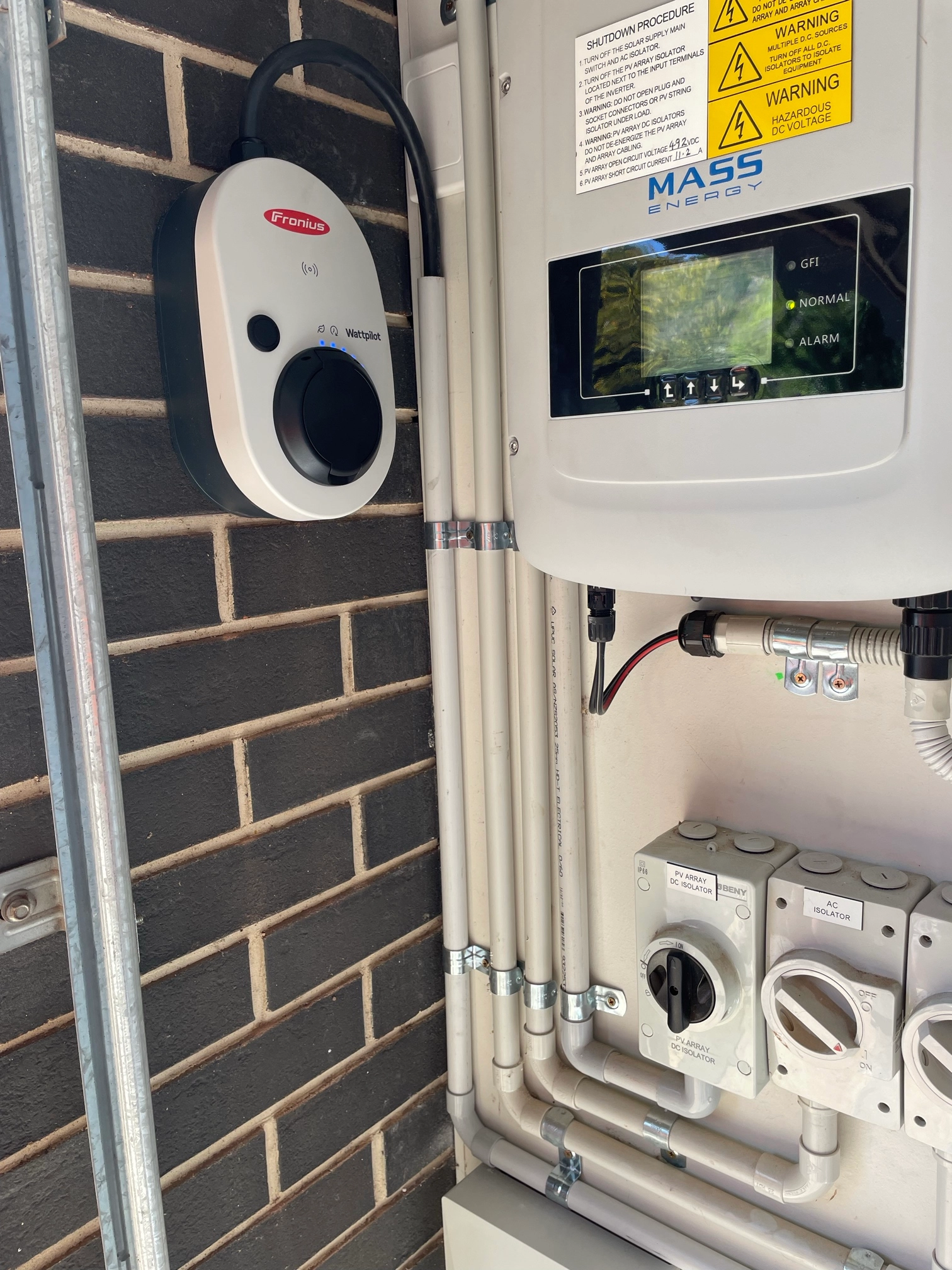
Yes, you can run your electric car in the sunshine. An EV charger with solar control watches what your panels produce, works out how much your home isn’t using, and sends that spare power into the car instead of exporting it to the grid for a small feed-in credit.
How well it works depends on four things: the charger, when the car is parked at home, whether your home runs on single or three-phase power, and how big your solar system is. If you’re already comparing chargers, our EV charger installation in Adelaide page covers the units and installs we offer.
How Does a Solar EV Charger Know When You Have Spare Power?
The charger uses a sensor, usually a current transformer clipped around the main cable at your switchboard, to measure how much power your home is sending back to the grid. When that number rises, the charger turns the charging rate up. When a cloud passes or the kettle goes on, it turns the rate down.
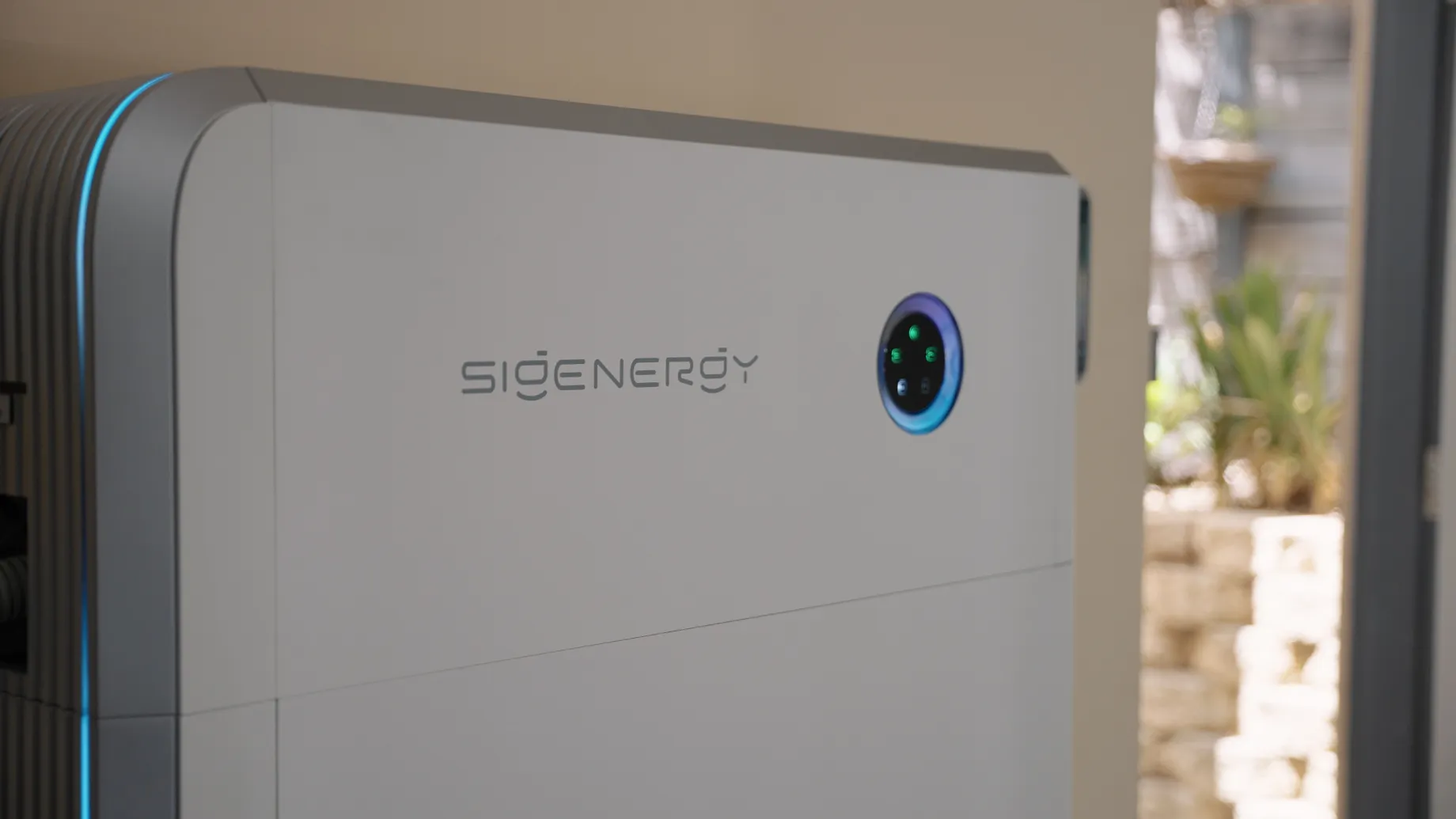
Some chargers read this data from the inverter instead of a separate sensor. Either way, the charger needs a live picture of your home’s surplus, so the brand of inverter you already have matters when choosing a unit. Sigenergy and Sungrow, for example, both make chargers designed to talk directly to their own inverters and batteries.
Most solar-aware chargers give you a few modes to choose from.
Solar-Only (Excess Solar) Mode
The car charges only from surplus solar. If the surplus drops too low, charging pauses and resumes when the sun comes back. This mode keeps grid use close to zero, but charging is slower and stops on heavily overcast days.
Solar Plus Grid Mode
The charger holds a small minimum rate from the grid and adds every bit of spare solar on top. Charging never stalls, which suits drivers who need a reliable top-up every day.
Scheduled or Boost Mode
Boost charges at full speed regardless of the sun. Scheduled charging lets you set a cheaper time window, such as overnight off-peak, for days when solar alone won’t fill the car.
Daytime or Overnight: When Should You Charge an EV With Solar?
Charging from solar only works while the car is plugged in during daylight. A car parked at the office from 8 till 5 never sees your roof’s best hours.
If the Car Is Home During the Day
Households that work from home, run a second car or have a retiree at home get the most from solar charging. Plug in when you arrive home in the morning or leave it plugged in on weekends, and the charger will soak up surplus between the dishwasher and the pool pump.
If You Commute Every Day
Most daily driving is shorter than people expect. A couple of long weekend sessions on solar, plus a scheduled overnight top-up when needed, often covers a full week.
Why Midday Charging Suits South Australia
South Australia’s grid regularly runs on very high levels of rooftop solar in the middle of the day. SA Power Networks encourages EV owners to avoid the 4pm to 9pm peak and notes that some retail plans include cheaper “solar sponge” pricing during the day. Even on days your own panels fall short, charging at midday on the right plan can still mean cleaner, cheaper power.
Not sure when your car can charge?
We can look at your solar output, switchboard and driving routine, then recommend a charger and mode that make the most of your roof.
Single Phase or Three Phase: Does It Change Solar Charging?
Yes. Three-phase power lets a charger run much faster from the grid, but it needs more spare solar before it can charge from the roof alone.
The Minimum Current Rule
Electric cars won’t accept a charge below a minimum of around 6 amps on each phase in use. On a single-phase home, a modest surplus is enough to get the car charging. A three-phase charger draws that minimum across all three phases at once, so it needs roughly three times the surplus before solar-only charging can start.
Phase Switching Chargers
Some chargers can switch between single and three-phase on the fly. They start on one phase when the surplus is small and step up to three phases when the sun is strong. If you’re weighing up a supply upgrade, our guide to three-phase power upgrades in Adelaide explains when it’s worth it.
Should You Add a Battery to Charge an EV With Solar?
A home battery helps, but probably not in the way most people imagine. The battery in an electric car is many times larger than a typical home battery, so draining your home battery into the car would empty it long before the car is full.
The better approach is to give each battery its own job:
- The car charges from daytime solar whenever it’s plugged in during the day.
- The home battery stores the rest and runs the house through the evening peak and overnight.
- The charger stays locked out of the home battery unless you choose otherwise, so the house doesn’t run short after dark.
Getting this right comes down to programming. The charger, inverter and battery need to know which load has priority, or they can end up competing for the same surplus. If you already have panels, our article on adding a battery to existing solar covers compatibility, and our solar battery systems page explains the batteries we install.
Do You Need a Bigger Solar System for an EV Charger With Solar?
Not always. Many Adelaide homes already export plenty of surplus during the day, and an EV is a better place for that energy than the grid. It’s still worth checking before you commit.
What Changes the Sizing Answer
- How far you drive each week. Weekly kilometres, not the car’s battery size, set how much energy you need to replace.
- When the car is home. A system that produces plenty at midday does little for a car that’s only parked at night.
- Your export limit. Many SA systems can’t send all their surplus to the grid, so energy you would otherwise lose can go straight into the car instead.
- Roof space and orientation. West-facing panels stretch generation into the afternoon, which suits drivers who get home early.
- Inverter headroom. Extra panels may need a larger or second inverter.
Our guide on how many solar panels you need in Adelaide explains how household usage drives system size, and our residential solar installation team can model an EV into the design from day one.
What to Check Before You Install a Solar EV Charger
These are the questions we work through on site before any install:
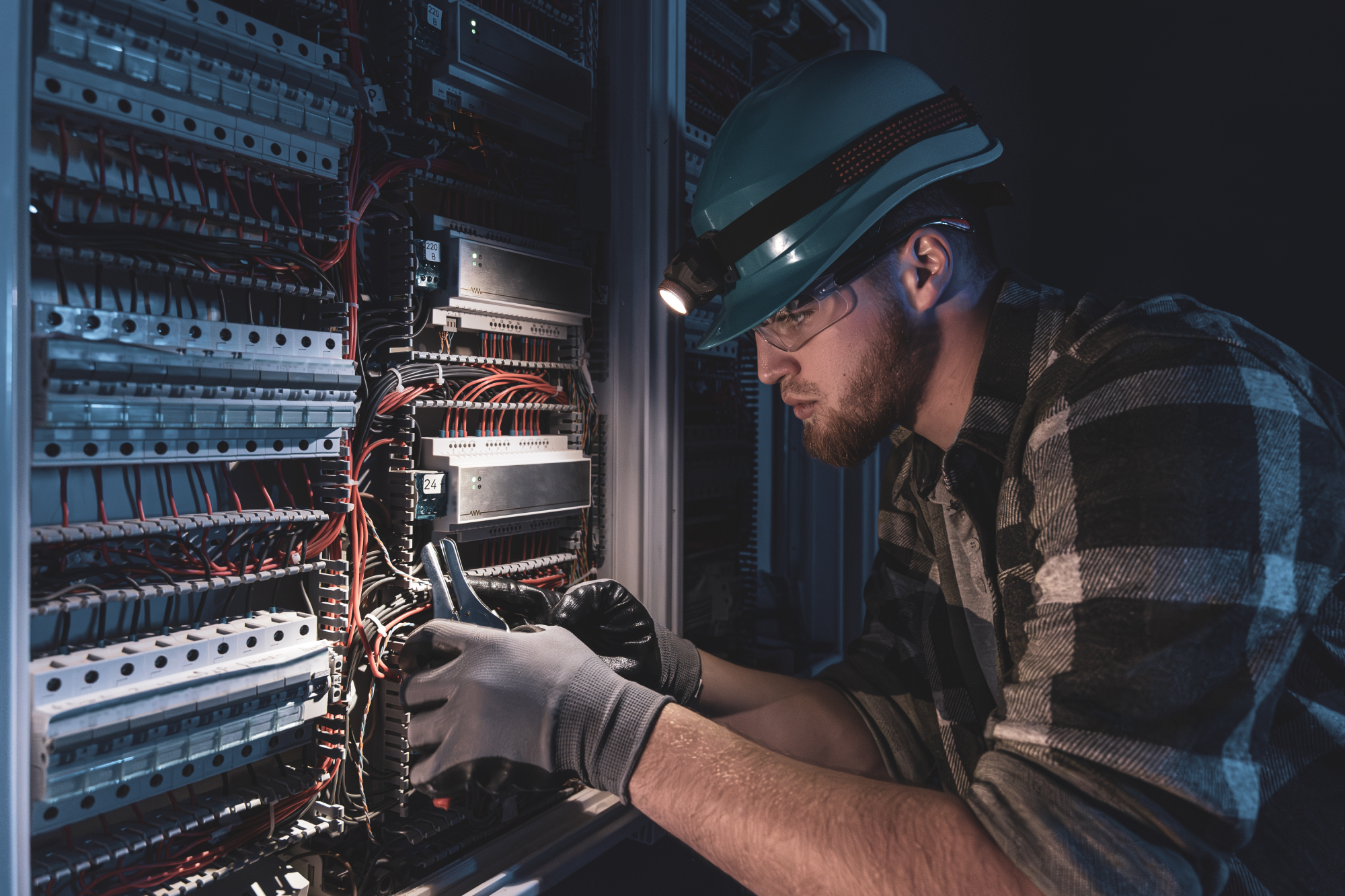
- Switchboard capacity. A dedicated EV circuit adds a large, long-running load. Older boards may need a switchboard upgrade first.
- Inverter and monitoring compatibility. Confirm the charger can read your surplus, either through its own sensor or from your inverter.
- Supply type. Single or three-phase determines which chargers suit you and how they behave on solar.
- Charger location and cable run. A shorter run from the switchboard to the parking spot keeps the install simpler.
- Future plans. A second EV, a battery or extra panels all affect which charger you should choose now.
For more on the practical side of choosing and placing a unit, read our 7 things to consider before installing an EV charger.
Charge Your EV From Your Own Roof
Solar-ready EV charger installation for homes across Adelaide, the Adelaide Hills and the Fleurieu Peninsula.