A Tesla Powerwall Adelaide installation stores 13.5 kWh of usable energy and delivers up to 11.04 kW AC of continuous power from a single wall-mounted unit, which is enough to run most Adelaide homes through an outage rather than just a fridge and some lights. Those two numbers explain most of the product’s appeal, and Tesla publishes both in its Australian datasheet.
What the datasheet does not cover is siting, switchboard readiness, backup wiring scope and how the unit behaves alongside an existing array. Those decide whether an install proceeds smoothly or stalls, so they are the focus here.
Tesla Powerwall 3 Specifications That Matter
Powerwall 3 is a DC-coupled all-in-one product — battery and solar inverter in the same enclosure — which changes how it fits a retrofit compared with an AC-coupled battery.
| Specification | Powerwall 3 |
|---|---|
| Usable capacity | 13.5 kWh |
| Continuous output | Up to 11.04 kW AC per unit |
| Maximum apparent power | 11,040 VA |
| Solar input supported | Up to 20 kW DC |
| Motor starting capability | Rated to 185 A LRA |
| Grid type | Single phase, 230 VAC, 50 Hz |
| Expansion | Additional complete units |
The 185 A LRA rating is the specification worth understanding. It describes the surge the unit can supply when a motor starts, which is what determines whether a ducted air conditioner or a bore pump will actually start during a blackout instead of tripping the system.
What Can a Powerwall Run During a Blackout?
At 11.04 kW continuous, one Powerwall 3 covers the everyday load of most Adelaide households simultaneously — lighting, fridges, cooking, a home office, and a reverse-cycle air conditioner. Capacity, not output, sets the duration.
Duration Depends on the Load, Not the Rating
A household drawing 1 kW overnight runs well over ten hours on a full unit. The same household running air conditioning at 4 kW empties it in a few hours. Summer outages during a heatwave are exactly when air conditioning matters most, which is why NG Elec models backup against summer consumption rather than an annual average.
Whole-Home Backup Versus Essential Circuits
Backup scope is a wiring decision made before installation.
- Essential circuits backup protects nominated loads — fridge, lights, power points, internet — and costs less to wire
- Whole-home backup covers the entire switchboard and needs the load to stay inside the unit’s output limit
- Solar recharging during an outage keeps the battery topped up through a multi-day event, which matters more in the Adelaide Hills and on the Fleurieu than in the inner suburbs
Siting and Installation Requirements in Adelaide
Powerwall installations follow Australian battery installation standards, and the site assessment checks four things before a date is booked.
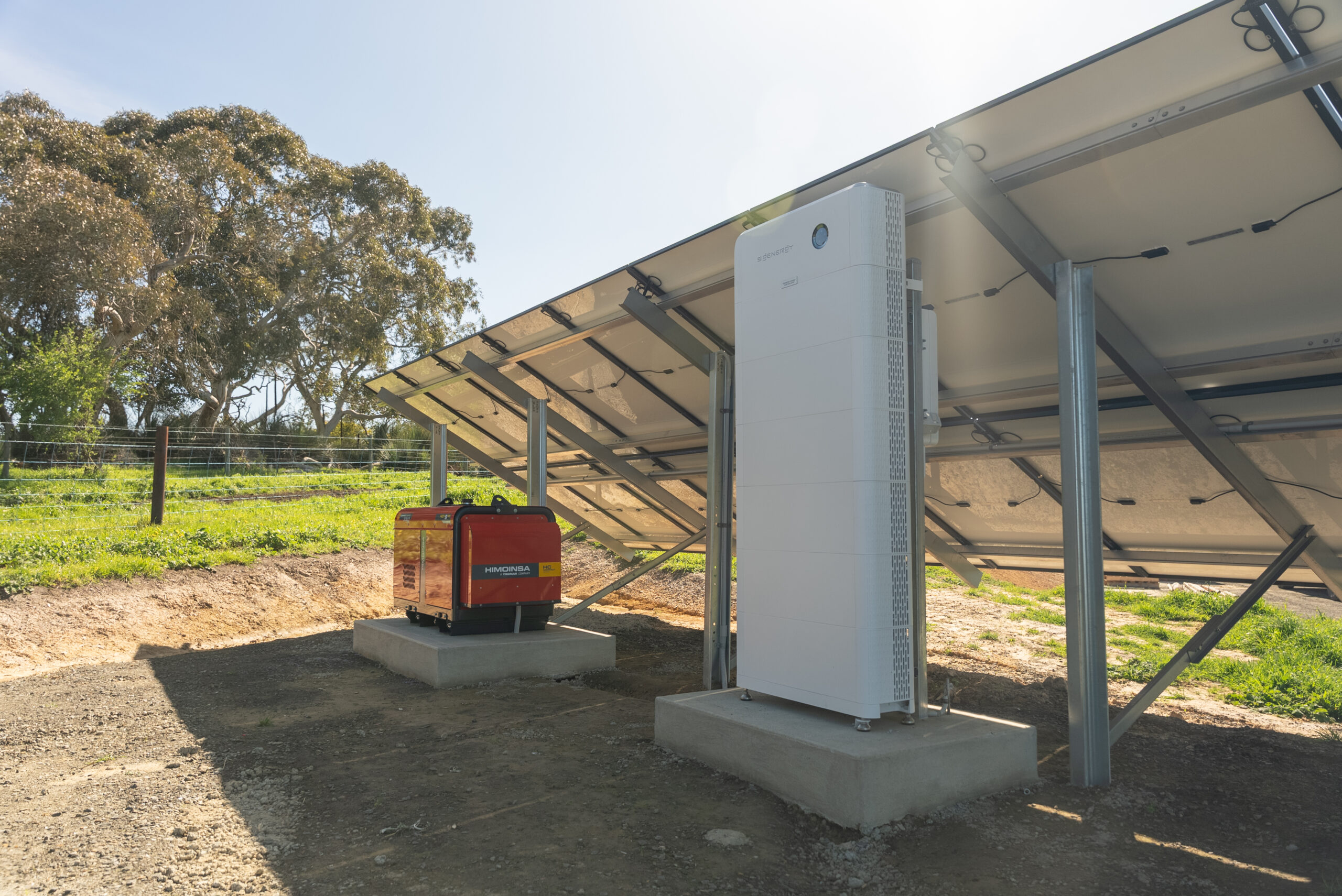
- Location and clearances. Garage and external wall installs are both common. Placement must respect required clearances from habitable rooms, escape routes and windows, which rules out some tight courtyards and internal walls.
- Temperature exposure. A west-facing wall in full afternoon sun works against battery performance through an Adelaide summer, so shaded or garage-interior positions are preferred where available.
- Switchboard condition. Older switchboards across Unley, Norwood and Burnside frequently need upgrading before a battery is compliant, and this is scoped up front rather than discovered on install day — see residential electrical services.
- Existing array and inverter. Because Powerwall 3 includes a solar inverter, a retrofit onto an existing string inverter needs a considered design decision rather than a straight swap.
Does a Powerwall Work With Existing Solar Panels?
Yes, and there are two common approaches. Panels can be re-terminated into the Powerwall’s own inverter, which consolidates hardware and frees the old inverter, or the existing system stays in place and the Powerwall runs alongside it.
The right choice depends on the age of the existing inverter, the array’s string configuration, and whether the household intends to add panels at the same time. Retrofit design is covered further under solar battery systems and residential solar installation.
Choosing a Powerwall Installer in Adelaide
Battery work is where installer capability separates most visibly, and three criteria carry real weight.
- Accreditation for the federal battery discount. Eligibility under the Cheaper Home Batteries Program requires a Solar Accreditation Australia accredited installer and an approved product, per the Clean Energy Regulator.
- Electrical depth beyond the battery. Switchboard upgrades, backup circuit design and metering changes are electrical work first and battery work second. NG Elec covers both in-house.
- Service after handover. Monitoring setup, firmware behaviour and warranty claims all arrive after the invoice, and the criteria for judging this are set out in NG Elec’s guide to the 7 qualities to look for in solar installers.
NG Elec works with Tesla Energy hardware alongside Sigenergy, Sungrow and BYD, which means the recommendation follows the household’s load profile rather than a single product line. Homes weighing the alternatives can compare all three in the Sigenergy, Sungrow and Tesla battery comparison.
Book a Powerwall Assessment for Your Home
A Powerwall suits Adelaide homes that want strong backup output from one unit and a straightforward app experience — provided the switchboard, siting and existing array support it. NG Elec’s certified solar electricians and energy specialists assess all three, confirm eligibility for the federal battery discount, and set out backup scope in writing before any work starts. Free quotes apply, and workmanship carries a lifetime warranty.
Call NG Elec on 0425 322 552 to book a Powerwall assessment and find out exactly what a compliant install involves at your property.
Frequently Asked Questions
How much does a Tesla Powerwall cost in Adelaide?
Installed cost depends on backup wiring scope, switchboard condition, whether panels are re-terminated into the unit, and the current federal battery discount. Contact NG Elec directly for an accurate quote — all pricing is confirmed before any work begins, with no obligation to proceed.
How long does a Powerwall installation take?
A straightforward single-unit install is usually completed in one day. Whole-home backup wiring, a switchboard upgrade or additional panels typically extend the job to two days, and grid connection approval timing depends on the network.
Can a Tesla Powerwall run air conditioning during a blackout?
In most cases yes. Powerwall 3 supplies up to 11.04 kW continuously with motor starting rated to 185 A LRA, which covers typical residential reverse-cycle systems. Run time then depends on how hard the air conditioner works against the 13.5 kWh of stored capacity.
Can I install a Powerwall without solar panels?
The unit will operate without an array, but the federal battery discount requires the battery to be installed alongside new or existing rooftop solar. Households without panels commonly install both together.
How many Powerwalls does an Adelaide home need?
One unit covers most households’ evening and overnight load. Larger homes, properties with pool pumps and multiple air conditioners, or households wanting multi-day independence sometimes install two, and NG Elec models this against actual consumption before recommending it.
Does a Tesla Powerwall qualify for the battery rebate in South Australia?
Eligible Powerwall installations qualify under the federal Cheaper Home Batteries Program when installed by an accredited installer using approved products. Rates step down annually, so current settings should be confirmed at quote stage.