The solar battery rebate South Australia households now use is a federal scheme, not a state one — the Cheaper Home Batteries Program, which applies a point-of-sale discount to eligible home batteries installed by an accredited installer. The discount is delivered through small-scale technology certificates rather than as a cash payment, so it appears on the quote as a reduction rather than arriving later as a cheque. For how the savings side of the sum works once a battery is installed, see how battery payback is calculated.
This guide explains who qualifies, what the capacity rules mean in practice, and the parts of the process homeowners most often get wrong. Figures are deliberately left out where they change: rates have already been revised more than once since the program opened, so current settings should always be confirmed against the official source before signing anything.
Which Battery Rebate Applies in South Australia in 2026?
The federal Cheaper Home Batteries Program is the scheme currently supporting battery installations across Adelaide and regional South Australia. South Australia’s earlier state-run Home Battery Scheme is no longer accepting new applications, so households that remember the older subsidy are working from out-of-date information.
Alongside the federal discount, some retailers offer separate incentives for joining a virtual power plant, which is a commercial arrangement with an energy retailer rather than a government rebate. The two are assessed separately, and a VPP agreement can carry conditions about how often the battery is dispatched.
How the Federal Discount Actually Works
The program creates certificates based on the battery’s usable capacity, and those certificates are assigned to the installer or retailer, who passes the value through as a discount on the installed price.
- The certificate value per usable kilowatt-hour steps down over time under a tapering schedule, so an installation completed this year attracts a different rate to one completed next year.
- Certificate prices float, which means the final dollar figure varies slightly even at a fixed certificate rate.
- The discount reduces the invoice at the point of sale — no separate claim form arrives afterwards for the homeowner to lodge.
Because the schedule tapers annually, timing has a genuine financial effect. Households already planning storage generally lose value by waiting, which is the opposite of the usual “wait for a better deal” instinct.
Am I Eligible for the Solar Battery Rebate in South Australia?
Eligibility rests on the equipment, the installer and the site, and all three must line up.
The Battery Requirements
- Nominal capacity between 5 kWh and 100 kWh, with the discount applied to the first 50 kWh of usable capacity
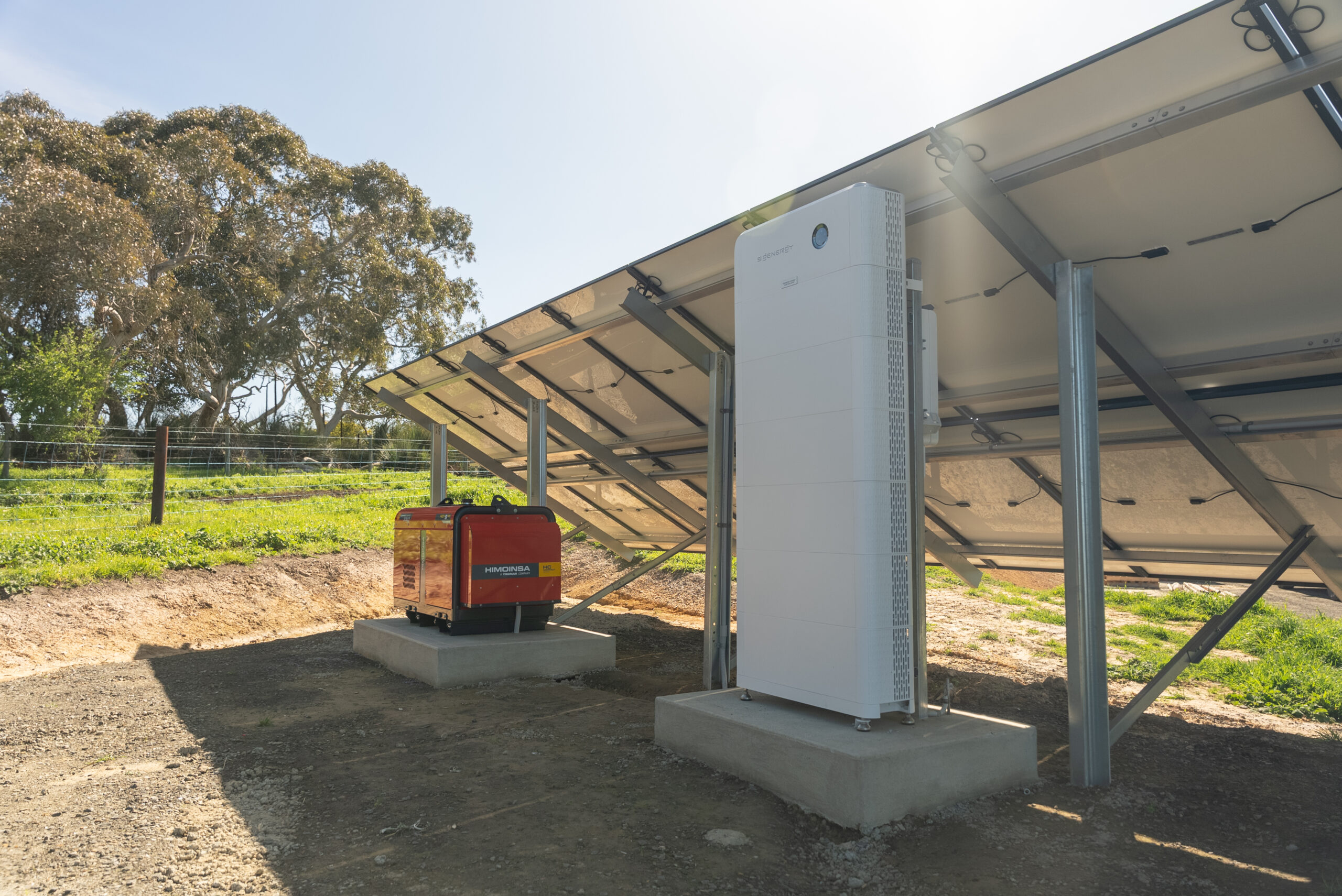
- The product must appear on the Clean Energy Council approved list — the options NG Elec installs are set out under solar battery systems
- The battery must be installed with new or existing rooftop solar — a battery on its own does not qualify
- The system must be capable of virtual power plant participation, even where the household chooses not to join one
The Installer Requirements
Installation must be completed by a Solar Accreditation Australia accredited professional using approved products. This is the requirement that most often catches homeowners out, because an electrician holding a standard licence is not automatically accredited for this work. NG Elec’s certified solar electricians and energy specialists handle the accreditation and paperwork as part of the install, and the wider criteria for judging an installer are covered in the guide to 7 qualities to look for in solar installers.
The Site Requirements
One discounted battery applies per property. Switchboard condition, available space for the unit, and the age and type of the existing inverter all affect whether the install proceeds as quoted — checks NG Elec completes during the site assessment rather than after the deposit.
What the Rebate Does Not Cover
Several costs sit outside the discount and belong in the budget from the start.
- Switchboard upgrades, which older homes across Mitcham and the Adelaide Hills frequently require
- Additional panels, where the existing array is too small to charge the battery through winter — covered under residential solar installation
- Backup circuit wiring, since whole-home backup costs more than essential-circuits backup
- Inverter replacement, where the existing unit is not hybrid-ready
- Full energy independence, since a grid-connected battery is not the same as an off-grid solar system
Panels themselves attract a separate long-standing federal incentive through the same certificate mechanism, which is why solar and battery quotes show two different discounts.
How to Claim the Discount Without Delays
The homeowner’s role is smaller than most expect, provided the installer is accredited.
- Confirm accreditation before accepting a quote, and ask for the product to be shown on the Clean Energy Council approved list.
- Have the current electricity bill and NMI available so the retailer and network details are correct on the application.
- Approve any pre-install electrical work early, because switchboard scheduling is the most common cause of delay.
- Check whether joining a VPP is worthwhile for the household before committing, since some agreements limit how the battery is used.
- Verify current program settings on the Cheaper Home Batteries Program page before signing, as rates and rules have changed since launch.
Households can also compare retailer plans and export rates through Energy Made Easy, which matters because South Australian feed-in tariffs have fallen and self-consumption now carries more value than export.
Find Out What the Rebate Means for Your Home
Rebate rules only become useful once they meet a specific roof, switchboard and consumption pattern. NG Elec assesses the existing system, confirms the battery options that qualify under current program settings, and sets out what the discount covers and what it does not — in writing, before any work begins. Free quotes apply, and workmanship carries a lifetime warranty.
Call NG Elec on 0425 322 552 to book a solar assessment and get a straight answer on what a battery costs after the rebate is applied.
Frequently Asked Questions
Is there still a solar battery rebate in South Australia?
Yes. The federal Cheaper Home Batteries Program applies to eligible battery installations across South Australia, delivered as a point-of-sale discount. The state’s earlier Home Battery Scheme is closed to new applications.
How much is the battery rebate worth?
The value is set per usable kilowatt-hour of capacity and steps down each year under a tapering schedule, so the figure depends on when the installation is completed and on the prevailing certificate price. NG Elec confirms the current amount on the quote rather than quoting a number that dates quickly.
Do I need solar panels to get the battery rebate?
Yes. The battery must be installed alongside new or existing rooftop solar. Households without an array can install both together and receive the panel incentive and the battery discount on the same job.
Can I claim the rebate on a second battery?
The discount applies once per property, so a second battery added later to the same address does not attract it again. Sizing the first stage with expansion in mind avoids that outcome.
Does joining a virtual power plant affect my rebate?
Eligible batteries must be VPP-capable, but joining a VPP is optional. VPP incentives come from energy retailers under commercial agreements and are assessed separately from the federal discount.
What does a battery cost in Adelaide after the rebate?
Final cost depends on usable capacity, whether an inverter is included, backup wiring scope and any switchboard work. Contact NG Elec directly for an accurate quote — all pricing is confirmed before any work begins, with no obligation to proceed.